
Empowered Self Defence (ESD)
Created by women, for women.
Building confidence, safety, and strength through trauma-informed self-defence.
WHAT IS EMPOWERED SELF DEFENCE?
Empowered Self Defence (ESD) is a primary prevention approach designed to combat Gender-Based Violence. ESD offers a comprehensive model for violence prevention, personal safety education, and fostering positive cultural change.
LEARN MORE AT THE VIDEO BELOW👇
ABOUT THE PROGRAM
ESD is a practical 2.5 hour trauma-informed, and evidence-based workshop designed for female-identifying persons.
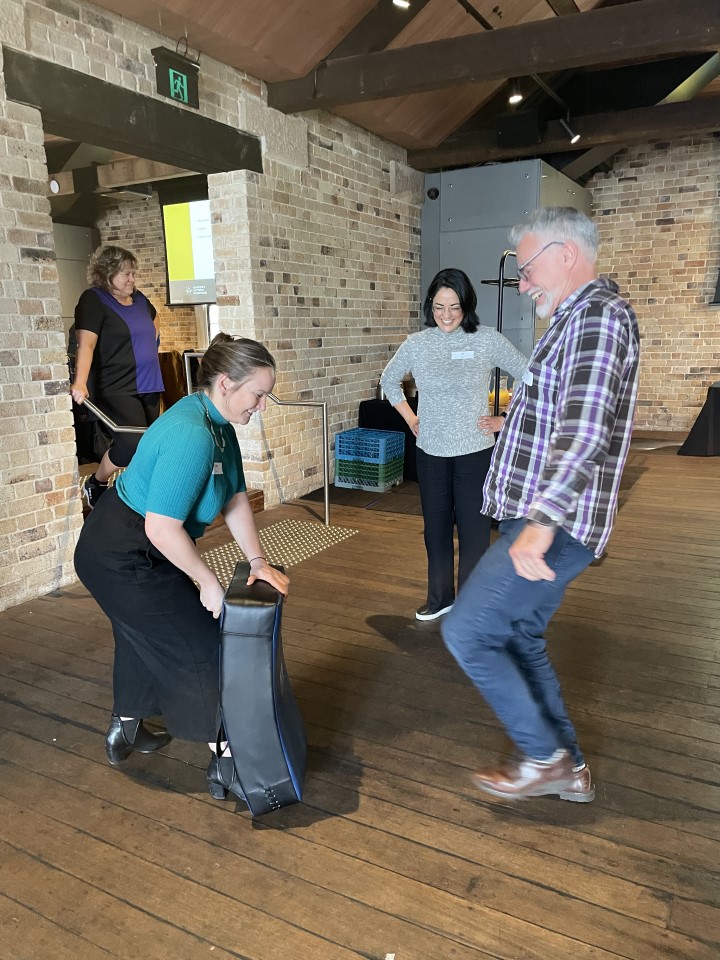
More than just physical skills, ESD addresses emotional, cognitive, and social empowerment. ESD utilises fun activities and interactive games, making it an enjoyable program.
Key workshop components include:
- Critically challenging gendered and social norms that normalise or excuse violence
- Risk detection and situational awareness, supporting early recognition and prevention
- Verbal boundary setting, de-escalation, and assertive communication for everyday and high-risk contexts
- Practical self-defence skills that are accessible, trauma-informed, and require no prior fitness or experience
- Confidence-building, connection, and empowerment, reinforcing personal agency and collective responsibility

A Dual Prevention Approach
Systemic and cultural change
By directly addressing gendered power imbalances and social norms, ESD aligns with gender‑transformative prevention priorities and supports safer cultures across community, education, and workplace settings.
Trauma‑informed individual empowerment
Through cognitive and somatic strategies, participants build confidence, assert boundaries, and respond effectively to harmful or unsafe situations. Programs are delivered with a strong emphasis on choice, consent, safety, and agency recognising the role of complex trauma and prioritising empowerment for victim survivors.
ESD is not about changing your behaviour so that perpetrators don't have to change theirs. It is not being presented as a solution to what is a systemic and social issue. The issue is not ours to solve. It's not our responsibility. The onus is, and solely should be, on the perpetrators.
Della O'Sullivan
Fight Like a Girl: An Empowering Self-Defence Guide for All Women
WHERE WE TEACH ESD
High Schools & Youth Services
Universities & Residential Colleges
Workplaces
Community Services
In High Schools & Youth Services
Investing in prevention is investing in student success.
Our Mission
Committed to ensuring that every young woman feels confident, safe, and empowered to respond to threat.
Our Vision
Contributing meaningfully to the national effort to end Gender-Based Violence in Australia.


Creating safe, informed, and empowered school communities means addressing sexual violence before it happens, where it happens, in the very places students live, learn, and grow.
The NSW Government has identified children, young people, and schools as priority areas for primary prevention, in the NSW Framework for Action. This framework recognising that adolescence is a critical period for addressing gender norms, strengthening agency, and reducing future risk of violence.
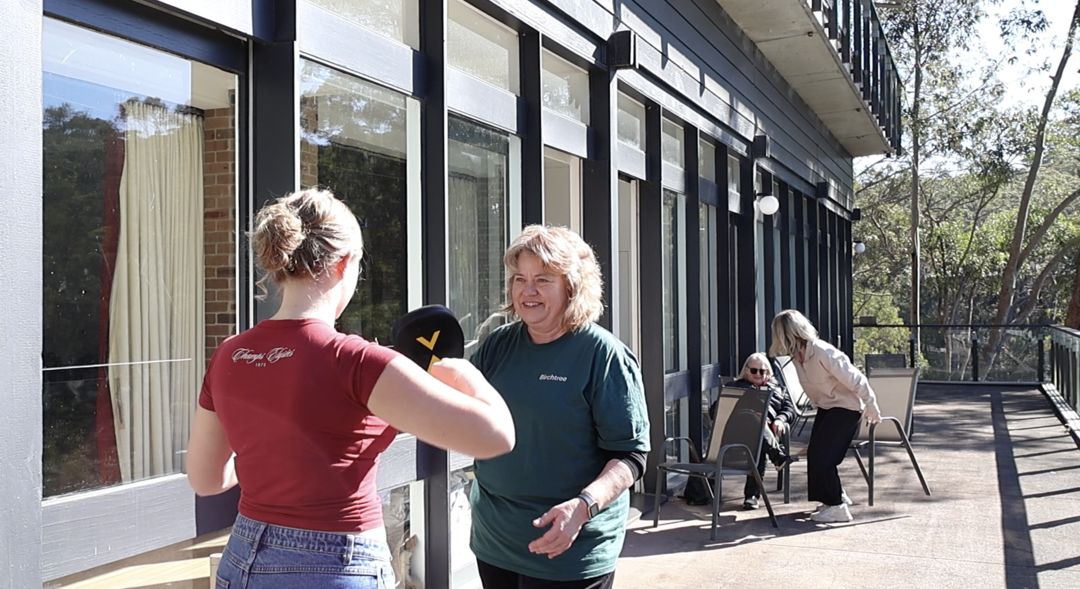
BACKED BY NATIONAL STRATEGY – BUILT FOR REAL-WORLD IMPACT.
ESD provides students with:
- Critical safety & empowerment tools
- Evidence-based strategies to prevent victimisation
- Increased confidence, autonomy, & resilience
- A trauma-informed approach to healing & peer connection

In Universities & Residential Colleges
Creating Safer Campuses. Empowering Stronger Students.
With campus sexual assault remaining a major concern, ESD offers a critical support and prevention tool for young adults. University ESD programs focus on:
- Navigating dating and consent
- Recognising coercion and manipulation
- Creating peer connection and shared advocacy
At Birchtree, we empower young peopl, especially women and gender-diverse students, to reclaim autonomy, resist violence, and foster a culture of safety and respect across university campuses.
Because every student deserves to feel safe, strong and supported.
Let’s Build Safer Campuses Together.
Our Program
- Helps students understand the social norms that contribute to sexual violence
- Teaches how to recognise red flags and thread indicators
- Builds skills in verbal de-escalation and boundary-setting
- Provides training in practical self-defence techniques
- Provides tools to identify and respond to sexual harassment
- Supports the development of self-worth, autonomy, and confidence
- Promotes mental health and healing
Why Us?
- Fulfill your legal obligations
- Position your organisation as a national leader in prevention
- Boost confidence, and trust in your institution
- Inclusive of all cultural backgrounds
- Inclusive of all who identify as women
Why It works:
With rising rates of gendered violence and harassment among students, programs like ESD have been shown to:
- Improve mental health, wellbeing, and connection to peers
- Significantly reduce the likelihood of victimisation and re-victimisation
- Build self-efficacy, assertiveness, and confidence
- Improve physical competence
- Reinforcing bodily autonomy, consent, and the rejection of rape myths
1 in 6 students have experienced sexual harassment since starting university.
Heywood et al., 2022
1 in 20 students report being sexually assaulted on at least one occasion.
Heywood et al., 2022
1 in 9 women have experienced sexual violence since the age of 15.
Australian Bureau of Statistics, 2022
Students in residential accommodation are more likely to experience gender-based violence.

In Workplaces
Empowering teams. Preventing harassment. Building cultures of respect.
- Addresses the gendered nature of sexual harassment in the workforce.
- Teaches verbal, psychological, and physical strategies to prevent sexual harassment.
The business sector must lead where policy lags. Prevention cannot wait.
Workplace-based ESD builds not just safety, but team cohesion and resilience. These workshops are tailored for professional environments, offering:
- Empowering tools for personal safety
- Improved communication and conflict navigation
ESD is not just a self-defence class.
It is a workplace culture intervention.
For Survivors
ESD provides survivors with an embodied healing experience.
Combining trauma-informed group work with powerful physical skills that reconnect participants with their bodies, boundaries, and voices.
Participants report:
- A reduction in fear and hypervigilance
- Increased confidence and autonomy
- A renewed sense of agency and strength
As Stephen Porges notes, choice, context, and connection are essential for restoring a sense of safety. ESD delivers all three—within a supportive community of peers who share and validate each other's experiences.

Why ESD is Needed
Gendered violence is a public health crisis.
Globally, the World Health Organization (WHO) reports that 1 in 3 women experience physical and/or sexual violence in their lifetime. Over 1 billion children are exposed to emotional, physical, or sexual violence each year.
In Australia, the statistics are equally alarming:
Sexual victimisation has risen sharply over the past decade (AIHW, 2020)
These figures are not just numbers—they represent lives impacted by trauma, often with long-term consequences for physical and mental health, including depression, anxiety, autoimmune diseases, and even early mortality.

Research Supporting ESD
ESD is supported by a growing body of research showing it can significantly reduce the risk of sexual assault and re-victimisation. Evaluations of ESD programs consistently demonstrate improvements in:
- Self-efficacy
- Assertiveness
- Perceived control
- Physical competence
- Rejection of rape myths
A 2019 meta-analysis found that nearly 48% of survivors were revictimised, often within three years of the initial assault. ESD aims to disrupt this cycle—providing both a preventative strategy and a therapeutic intervention.
Unlike many traditional trauma group therapies, ESD integrates cognitive, emotional, and somatic (body-based) healing—creating a whole-self experience of empowerment.
Bring ESD to your school, university, workplace or community
Interested in hosting an Empowered Self Defence (ESD) workshop?
We’d love to explore how ESD can support your community’s wellbeing, safety, and empowerment.
To start the conversation, send us an email at projects@birchtreefoundation.com.au.
Prefer to chat? Call us directly on 0493 262 391.
Or click below to fill out a contact us form!
Meet the team 👋

Want to volunteer with us?
The team would love to have you.
Complete our volunteer application form today!
Check out our social media pages
To learn more about upcoming, events, our resources, and ongoing research.