Building Evidence for Trauma Healing, Prevention and Empowerment
At Birchtree, we believe that meaningful healing must be matched with meaningful evidence.
Alongside delivering trauma-informed services and prevention programs, we are committed to generating new knowledge through research, evaluation and academic collaboration. Our current work includes evaluating our Empowered Self Defence (ESD) programs, exploring trauma healing over time through longitudinal research, and supporting doctoral research investigating ESD as a trauma-informed approach to preventing and responding to gender-based violence.
Through partnerships with universities, researchers, students, community organisations and government stakeholders, we aim to strengthen the evidence base for innovative approaches to trauma recovery, violence prevention, empowerment and mental health care.
Evaluating Empowered Self Defence (ESD) as a Primary Prevention and Early Intervention Program for Gender-Based Violence in Australia
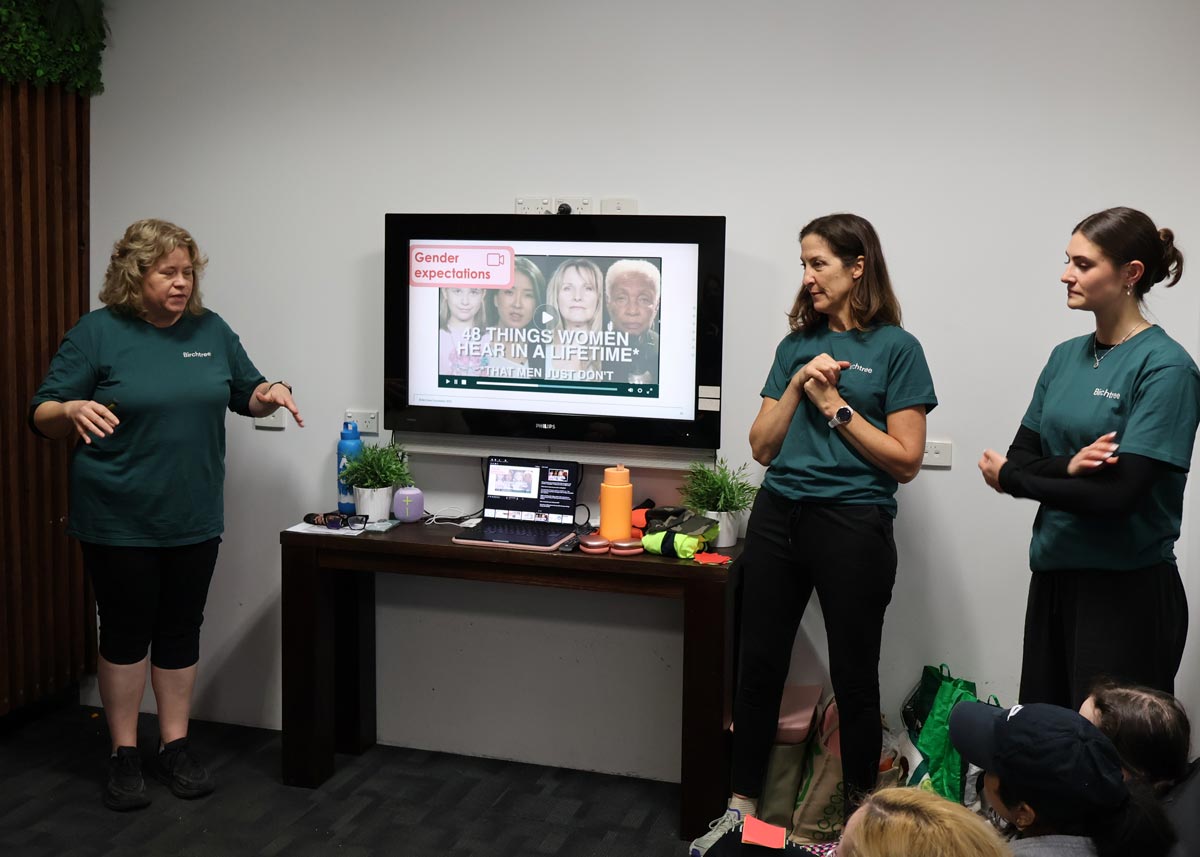
The Birchtree Foundation is currently undertaking a multi-site program evaluation examining the impact of Empowered Self Defence (ESD) workshops delivered through schools, universities, community organisations and other partner institutions across Australia.
While a substantial international evidence base demonstrates the effectiveness of ESD programs in reducing sexual violence and increasing confidence, self-efficacy and safety skills, there is currently limited published Australian research in this area. This study aims to address that gap by generating Australian evidence regarding the effectiveness of ESD as a primary prevention and early intervention initiative for sexual and gender-based violence.
Participants complete surveys before the workshop, immediately after participation, and three months later.
The research examines changes in:
Safety knowledge and self-protective skills
Confidence and self-efficacy in responding to unsafe situations
Attitudes and beliefs relating to gender-based violence
Victim-blaming attitudes and harmful gender stereotypes
Feelings of confidence, agency and empowerment
The extent to which changes are sustained over time
The findings will contribute to the growing evidence base for violence prevention and inform the future development of trauma-informed approaches to gender-based violence prevention in Australia.
Higher Degree Research
PhD Research: Empowered Self Defence as a Trauma-Informed Intervention for Gender-Based Violence
Birchtree Foundation is proud to support doctoral research being undertaken by Co-Founder and Clinical Psychologist Jace Cannon-Brookes through the University of Sydney Faculty of Medicine and Health.
This research explores Empowered Self Defence (ESD) as a trauma-informed intervention for both the prevention of and response to gender-based violence. Drawing on feminist theory, trauma theory and emerging concepts such as moral injury, the research seeks to better understand how ESD may contribute to safety, agency, empowerment and long-term wellbeing.
The research examines how embodied learning experiences such as ESD may influence psychological, social and behavioural outcomes, and whether ESD can serve as a bridge between violence prevention and trauma recovery.
The PhD complements the Foundation’s program evaluation research by investigating the theoretical and clinical mechanisms through which ESD may support individuals and communities affected by gender-based violence.
Together, these projects reflect Birchtree’s commitment to building an Australian evidence base for innovative, trauma-informed approaches to violence prevention, recovery and community safety.
Student Placements and Research Partnerships
Birchtree has a long-standing commitment to supporting the next generation of researchers and mental health professionals.
We regularly partner with universities to provide student placements, research opportunities and supervision across psychology, counselling, social work and related disciplines. Through these partnerships, students gain valuable experience in trauma-informed practice while contributing to projects that seek to improve outcomes for individuals and communities affected by trauma.
Our team welcomes opportunities to collaborate with honours, masters and doctoral students whose research interests align with our areas of expertise.
Research Collaboration
We actively seek partnerships with researchers, universities, government agencies, schools, health services and community organisations that share our commitment to improving outcomes for people affected by trauma and violence.
Areas of research interest include:
Trauma recovery and post-traumatic growth
Gender-based violence prevention and response
Empowered Self Defence (ESD)
Trauma-informed care
Moral injury and moral repair
Embodiment and recovery from trauma
Mental health service innovation
Community wellbeing and resilience
Program evaluation and implementation science
Prevention and early intervention approaches for violence and adversity
Through collaboration, we aim to contribute to research that informs policy, strengthens practice and creates safer, healthier communities.
Get Involved
We welcome enquiries from researchers, universities, students, funding bodies and community organisations interested in collaborating on research, program evaluation or knowledge translation initiatives.
If you would like to learn more about our current projects or discuss potential research partnerships, please contact the Birchtree Foundation.
Birchtree is proud to offer higher degree research opportunities to Masters and PhD students with our collaborative partners.
Current Students
Harvey Billingham
University of Technology Sydney
Clinicians perspectives of the trauma healing process. Supervisors – Dr Sophie Reid & A/Prof Deborah Mitchinson
Past Students
Ksenia Mangazeeva
University of Canberra
Evaluating Birchtree Empowered Self Defence Program. Supervisors – Dr Sophie Reid & A/Prof Phil Kavanagh
Isabella Montalvo
University of Canberra
What Really Matters in Therapy – exploring what clients hope to gain from therapy. Supervisors – Dr Sophie Reid & A/Prof Phil Kavanagh
Maternal emotion regulation as a mechanism of intergenerational trauma transmission amongst childhood maltreatment survivors and their children: A systematic review. Submitted for publication, Journal of Abuse and Neglect Supervisors – Dr Sophie Reid